
Is Reformer Pilates Difficult? Why Does It Feel So Challenging Despite Looking Easy?

Updated: 2 days ago
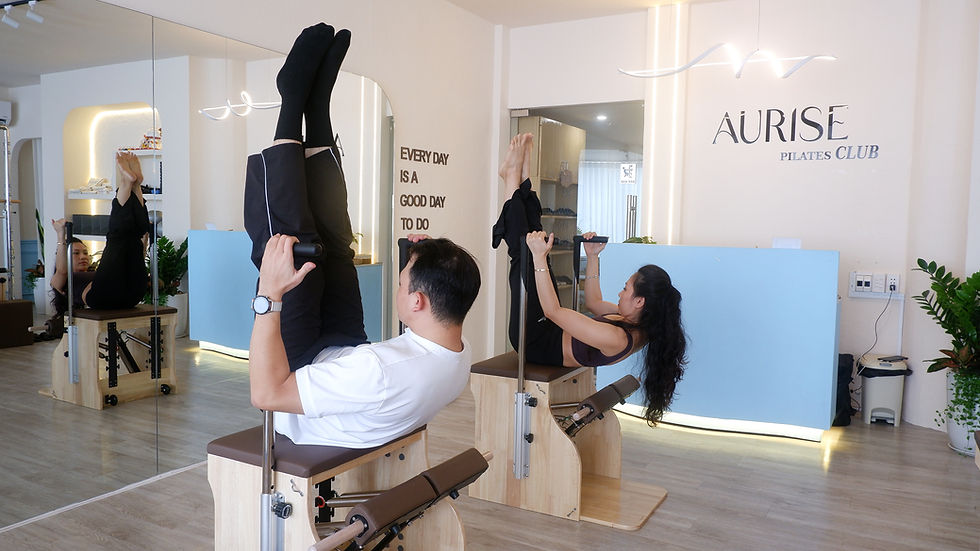
At first glance, Reformer Pilates often looks gentle and effortless, with slow, flowing movements performed on a specialized machine. There is no constant jumping or heavy weightlifting, yet after just a few repetitions, many people begin to feel their muscles warming up, trembling slightly, and gradually becoming fatigued.
So, is Reformer Pilates difficult? Why can movements that appear so simple create such a noticeable challenge for the body?
The answer lies in how the Reformer provides resistance, the level of control required during each movement, and the amount of time your muscles remain engaged throughout an exercise.

Is Reformer Pilates Actually Difficult?
Reformer Pilates isn't necessarily difficult, but it's not always as easy as it looks. Rather than focusing on speed or explosive strength, Reformer Pilates emphasizes coordination, breathing, and controlled movement.
Exercises are performed on a Reformer machine, which features a moving carriage, a spring-based resistance system, straps, and adjustable components that support different body positions.
Thanks to this design, exercises can be modified to accommodate a wide range of abilities, from complete beginners to experienced practitioners.
The challenge of Reformer Pilates doesn't always come from complicated movements.
Instead, it often lies in maintaining precision and control throughout each exercise.
For example, a seemingly simple leg lift may require the abdominal muscles, hip muscles, and stabilizing muscles to work together to keep the body balanced.
This means beginners don't need exceptional strength or flexibility to get started. What matters most is choosing appropriate exercises, becoming familiar with the equipment, and gradually developing better body control.
If you're unfamiliar with the equipment, you can explore our article What Is Reformer Pilates? 7 Tips for Beginners to better understand how the machine works and what to expect during your first session.
Why Does Reformer Pilates Look Gentle but Still Create That Muscle “Burn”?
The muscle “burn” experienced during Reformer Pilates is often described as a warming or gradually fatiguing sensation in the muscles.
Even when movements are small and performed slowly, your muscles are still working to control resistance and maintain proper positioning.
Three main factors explain why Reformer Pilates can feel surprisingly challenging.
Resistance From the Reformer Machine
One of the defining features of Reformer Pilates is its spring-based resistance system.
When you push or pull the carriage, your muscles must generate force to move it while controlling the machine's motion.
Unlike lifting a fixed weight, the resistance provided by springs changes depending on how far they are stretched and how the exercise is performed.
This requires your muscles to continuously adjust their effort while maintaining stability throughout the movement.
Interestingly, lighter springs don't always mean an easier exercise.
In certain movements, reducing the assistance provided by the springs can require your body to work harder to maintain balance and control the carriage.
This combination of resistance and control is what makes even simple-looking exercises surprisingly demanding.
Controlled Movement Instead of Speed
In Reformer Pilates, movement quality is generally prioritized over speed or the number of repetitions.
Rather than rushing through an exercise, participants are encouraged to move with control, maintain stability, and avoid relying excessively on momentum.
For example, during a leg press on the Reformer, the challenge isn't simply pushing the carriage away.
You also need to control its return, preventing the springs from pulling the carriage back too quickly.

This requires different muscle groups to coordinate during both phases of the movement.
Meanwhile, the abdominal and stabilizing muscles help maintain proper body positioning.
That's why even a small movement, when performed precisely and with control, can create a noticeable muscular challenge.
Time Under Tension
Another factor contributing to muscle fatigue during Reformer Pilates is Time Under Tension (TUT), which refers to how long a muscle remains under load during an exercise.
When movements are performed slowly and with control, or when a position is held for a certain period, muscles may remain engaged for longer than they would during faster movements.
For example, during a leg exercise, you might be instructed to push the carriage away over several seconds before gradually returning it to the starting position.
Even without particularly heavy resistance, repeating this controlled movement can gradually fatigue the muscles.
Slight muscle trembling may also occur as muscles become tired and make continuous adjustments to maintain stability.
However, muscle burning or trembling isn't the only indicator of an effective workout.
A quality Reformer Pilates session should still prioritize proper technique, controlled movement, and an appropriate level of challenge for your body.
What Challenges Do Beginners Commonly Face in Reformer Pilates?
For someone trying Reformer Pilates for the first time, the initial challenge often isn't the complexity of the exercises themselves.
Instead, it comes from learning how to use the equipment and coordinate different parts of the body during movement.
Some common beginner challenges include:
Getting used to the Reformer machine: The moving carriage and spring system may feel unfamiliar, especially when you're learning to control speed and maintain stability.
Coordinating breathing with movement: Beginners sometimes concentrate so much on the exercise that they forget to maintain a natural breathing rhythm.
Understanding which muscles to engage: Certain exercises require the abdominal muscles, glutes, or stabilizing muscles to work in ways that may initially feel unfamiliar.
Maintaining proper alignment: Keeping the shoulders, spine, and pelvis in appropriate positions while moving can take time and practice.
These challenges are a normal part of learning a new form of exercise.
Beginners aren't expected to perform every movement perfectly during their first session.
Instead, focusing on fundamental techniques, following instructions, and progressing at your own pace can make Reformer Pilates feel more approachable.
If you're still deciding between different Pilates formats, our article Mat Pilates vs. Reformer Pilates: What's the Difference and Which Is Better for Beginners? can help you understand the experience and level of support each method offers.
How Might Your Body Feel After Your First Reformer Pilates Session?
Everyone may experience their first Reformer Pilates session differently, depending on their fitness level, previous exercise experience, and workout intensity.
Some people feel as though they've worked their entire body, while others notice mild fatigue in muscle groups they don't usually engage.
Common sensations may include:
Mild fatigue in the abdominal muscles and glutes: These muscles are frequently involved in Reformer exercises to support movement and maintain stability.
Muscle fatigue in the legs or arms: Certain muscle groups may work harder than usual as they adapt to the resistance provided by the springs.
Greater awareness of posture: Paying attention to shoulder positioning, pelvic stability, and spinal control may help you become more conscious of your posture in everyday activities.
A sense of relaxation after exercise: Combining breathing with controlled movements may leave you feeling comfortable and refreshed after a session.
Some people may also experience Delayed Onset Muscle Soreness (DOMS), which commonly begins around 12–24 hours after exercise and may become more noticeable the following day.
This can be a normal response when the body is adapting to an unfamiliar type of physical activity.
However, more soreness doesn't necessarily mean a more effective workout.
If you experience sharp pain, joint pain, dizziness, or unusual discomfort, stop the exercise and inform your instructor. Seek appropriate medical advice if symptoms are severe or persistent.
The most important outcome of your first session isn't how sore your muscles feel afterward.
It's beginning to understand how your body moves, how well you can control different exercises, and what your current physical limits may be.
Positive changes generally require time and consistency.
You can learn more in our article How Long Does It Take to See Results From Pilates? Changes You May Notice Along the Way to develop realistic expectations for your Pilates journey.
Is Reformer Pilates Suitable for Complete Beginners?
Yes. Reformer Pilates can be suitable even for people who have never practiced Pilates before, provided the exercises are selected and adjusted according to their individual abilities.
One of the advantages of the Reformer machine is its ability to accommodate different resistance levels, ranges of motion, and exercise positions.
This allows beginners to start with fundamental movements before progressing toward exercises that require more coordination and control.
During the early stages, it's helpful to focus on three things: becoming familiar with the equipment, understanding basic movement principles, and developing body control.
To make your first Reformer Pilates experience more comfortable, consider the following tips:
Start with a beginner-friendly class: Choose fundamental exercises with an appropriate level of difficulty.
Communicate with your instructor: Share your exercise experience, training goals, and any physical concerns that may affect your movements.
Don't rush into advanced exercises: Take time to develop proper technique before increasing the difficulty.
Practice consistently: Regular exercise, combined with adequate recovery, allows your body to adapt gradually.
If you have an injury, joint-related concerns, or a medical condition that may affect your ability to exercise, seek professional advice before starting and inform your instructor so that suitable adjustments can be made.
Reformer Pilates doesn't require exceptional flexibility or strength from the beginning.
What matters more is choosing an appropriate starting point and being patient as you learn how to move with greater control.
To build a sustainable exercise routine, you can also explore How Many Times a Week Should You Do Pilates? A Training Schedule Based on Your Goals for guidance on choosing a frequency that suits your fitness level and lifestyle.
Begin Your Reformer Pilates Journey With Aurise Pilates

Reformer Pilates may look gentle, but every movement offers an opportunity to discover how your body works.
From becoming familiar with the machine's resistance to learning how to coordinate breathing and posture, the experience goes beyond simply completing exercises.
It's also about developing a stronger connection with your body through movement.
At Aurise Pilates, you can begin exploring Reformer Pilates through fundamental exercises, with guidance and adjustments suited to your individual abilities.
Whether you've never tried Pilates before or you're looking for a new way to stay active, the goal isn't to master as many difficult movements as possible.
Instead, it's about gradually becoming more confident, comfortable, and aware of how your body moves.


Comments