
Mat Pilates vs Reformer Pilates: What’s the Difference? Which Is Better for Beginners?

Updated: Sep 21
When you’re new to Pilates, one of the first decisions you may face is choosing between Mat Pilates and Reformer Pilates. Both are based on the same core principles, including movement control, breathing, stability and coordination, but the workout experience can feel quite different.
Mat Pilates takes a more minimal approach and relies primarily on body weight, while Reformer Pilates incorporates a spring-based machine for additional resistance and support. The right choice ultimately depends on your goals, current fitness level and how you prefer to begin your Pilates journey.
What Is Mat Pilates?
Mat Pilates is a form of Pilates performed primarily on a mat, using your own body weight to create resistance and challenge.
Exercises often focus on core control, spinal movement, balance and coordination between different muscle groups. Some classes may also incorporate small props such as Pilates balls, rings or resistance bands.
One of the main characteristics of Mat Pilates is its simplicity and flexibility. Since you don’t need large equipment, it can be practised at a studio or, once you understand the basic techniques, you can continue with selected exercises at home.
However, not using a machine doesn’t necessarily make Mat Pilates easier. In many exercises, you have to control your entire body weight without additional support, which can make Mat Pilates surprisingly challenging.

What Is Reformer Pilates?
Reformer Pilates is performed on a specialised piece of equipment called a Reformer, which includes a moving carriage, springs, straps and a footbar.
The springs can provide either resistance or assistance depending on the exercise. This allows instructors to adjust the level of difficulty according to each person’s fitness level and ability.
The Reformer also allows you to perform a wide variety of movements while lying down, sitting, kneeling or standing, creating a more varied workout experience.
If you’ve never used the equipment before, you can read what beginners should know before starting Reformer Pilates to get a better idea of what to expect from your first session.
What’s the Difference Between Mat Pilates and Reformer Pilates?
Category | Mat Pilates | Reformer Pilates |
Equipment | Primarily uses a mat, with optional small props such as balls, Pilates rings or resistance bands | Uses a Reformer with springs, straps, a footbar and moving carriage |
Support & resistance | Primarily relies on body weight and gravity | Springs can provide additional resistance or assistance depending on the exercise |
Exercise adjustments | Movements, range of motion and props can be modified, but exercises rely heavily on body control | Resistance, support and exercise setup can be adjusted more easily to suit individual ability |
Workout experience | Minimal and focused on controlling your body on the mat | Offers a wider variety of movements with sliding, pulling and spring resistance |
Cost & accessibility | Generally more accessible and can be practised in a wider range of settings | Usually more expensive because it requires specialised equipment and classes often have limited capacity |
Overall, Mat Pilates relies more heavily on your own body to create the challenge, while Reformer Pilates introduces additional resistance and support through specialised equipment.
Neither is universally better than the other. What matters is choosing the format that best suits your body, goals and preferred workout experience.
Should Beginners Start with Mat or Reformer Pilates?
There is no single option that every beginner needs to choose.
If you prefer a simple starting point, want to learn how to control your body using your own weight and are looking for a more accessible format, Mat Pilates may be worth considering.
If you prefer additional support from equipment, want adjustable resistance or would like more guidance during your first sessions, Reformer Pilates may be a better fit.
For people who have been relatively inactive or are completely new to Pilates, the Reformer can sometimes make certain movements easier to understand because the springs and equipment provide clearer resistance and support.
However, the most important factors are still appropriate intensity and good technique rather than simply choosing whichever option seems “easier.”
If you’re unsure how to structure your routine when starting out, you can also explore how often you should do Pilates based on your goals.
Can You Combine Mat Pilates and Reformer Pilates?
Yes. Mat and Reformer Pilates can complement each other well.
Mat Pilates helps you develop body control without relying heavily on equipment. Reformer Pilates, meanwhile, introduces adjustable resistance, support and a wider variety of movement options.
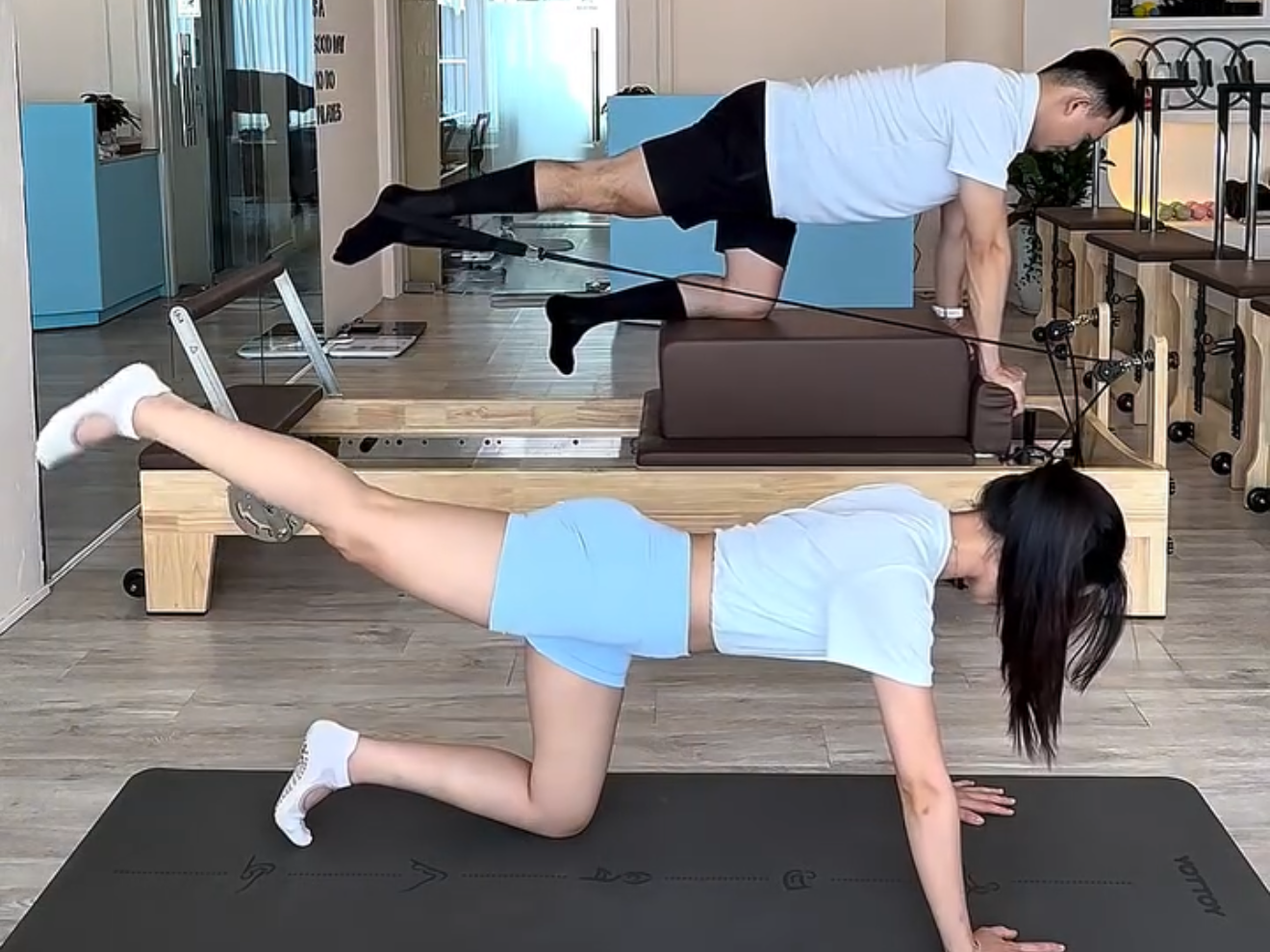
For example, you might practise Reformer Pilates at a studio where an instructor can guide your technique, then incorporate a few simple Mat exercises at home on days when you want some lighter movement.
Combining both formats can also add variety to your routine while giving you different ways to develop strength, mobility and body control.
If posture is one of your main goals, you can also learn more about how Pilates supports posture awareness and control.
Start Your Pilates Journey at Aurise Pilates Club
Both Mat and Reformer Pilates can be great starting points when they suit your current ability and individual goals.
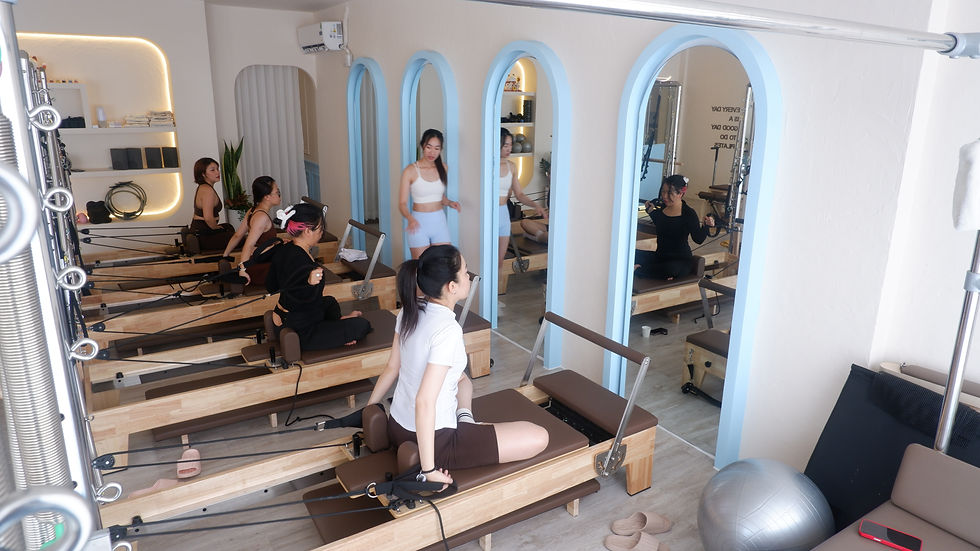
At Aurise Pilates Club, exercises are tailored to your fitness level and experience, helping beginners become familiar with Pilates at a comfortable pace and build a routine that feels easier to maintain.
Inbox Aurise to learn more and book your Pilates session in District 1.


Comments