
How Long Does It Take to See Results from Pilates? Changes You May Notice

Updated: Sep 21
One of the most common questions when starting Pilates is: How long does it take to see results from Pilates? In reality, Pilates isn’t the kind of workout where you need to reach a specific milestone before you can notice any benefits.
Changes often happen gradually. You may first notice better body control and movement awareness, followed by improvements in strength, flexibility and eventually more visible changes in how your body feels or looks. The timeline will vary depending on your starting point, workout schedule and how consistently you maintain your weekly routine.
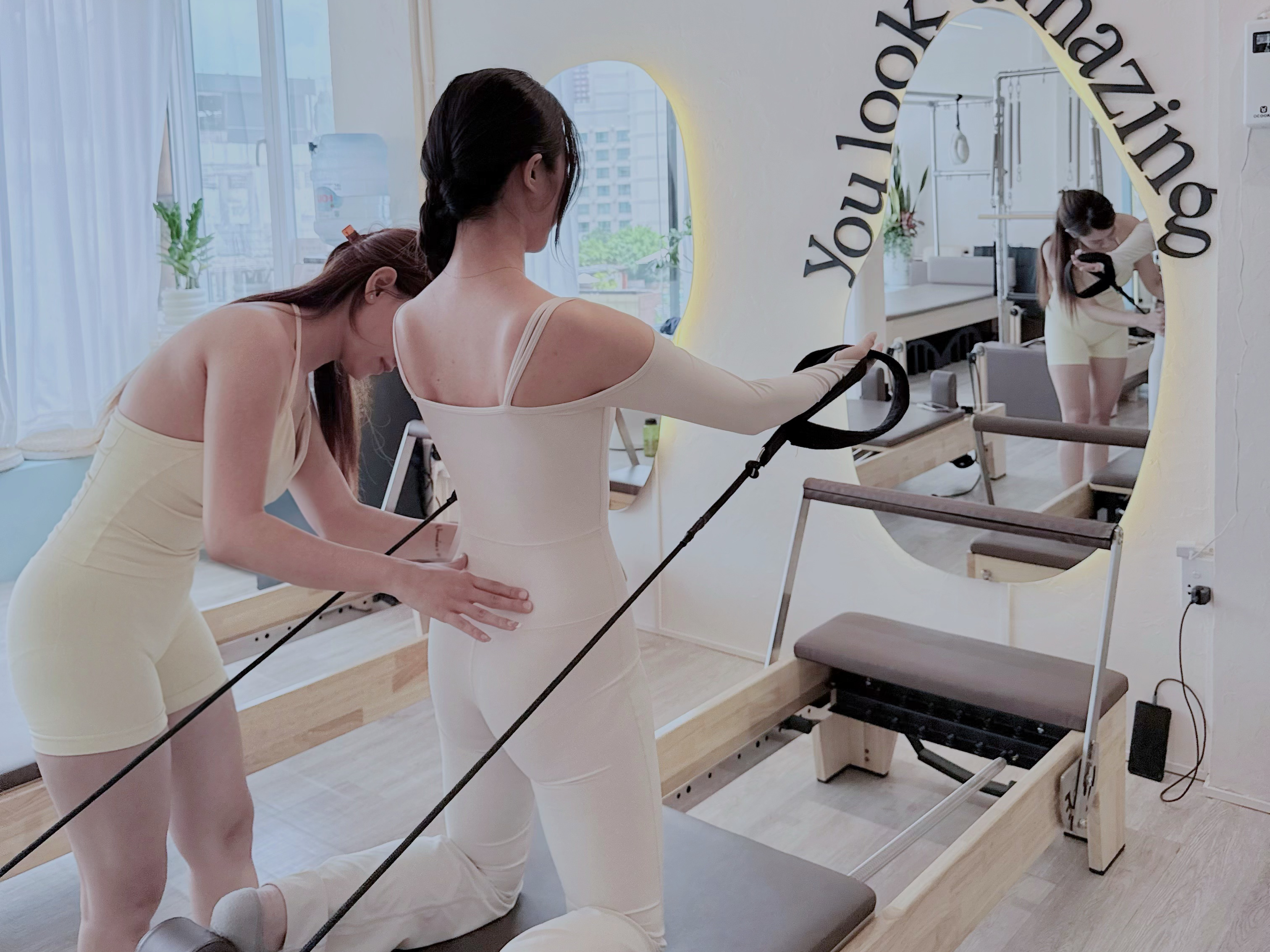
How Long Does It Take to See Results from Pilates?
There is no single timeline that applies to everyone.
For beginners, the first changes may have less to do with appearance and more to do with how the body moves. You might notice that certain exercises feel more stable, balancing becomes easier or you have a better understanding of how to engage your core.
Changes in strength, flexibility and body composition generally require more time and consistency. Rather than expecting to look different after a certain number of sessions, it can be more useful to track progress through several different signs.
What Changes Can You Notice with Regular Pilates?
Better Movement Control
During your first few sessions, coordinating your breathing, arms, legs and core may feel surprisingly challenging.
With consistent practice, you may begin to understand how to control each movement more effectively, maintain greater stability and rely less on momentum when performing exercises.
Improved Strength and Muscular Endurance
Pilates uses body weight and resistance from equipment such as the Reformer to challenge different muscle groups.
Over time, you may notice that you can hold a position for longer, work with a higher level of appropriate resistance or complete exercises with less fatigue than before.
Greater Flexibility and Mobility
Pilates combines strength with controlled ranges of motion, so many people find that their bodies feel less stiff and certain movements become more comfortable with regular practice.
Flexibility doesn’t have to be measured by how far you can stretch. A more practical sign of progress is whether your body can move more comfortably and with greater control.
Better Posture Awareness
Pilates frequently brings your attention to the position of your pelvis, spine and shoulders, as well as how you distribute weight through the body.
Repeatedly practising these adjustments can help you become more aware of your posture both during Pilates and in everyday life.
If posture is one of your main goals, you can learn more about how Pilates supports posture and body awareness.
Changes in How Your Body Feels and Looks
As your strength and body control improve, you may begin to feel stronger, firmer or more comfortable in your body.
However, visible changes also depend on factors such as nutrition, overall activity level, sleep and your starting point. Pilates will not create exactly the same physical results for everyone.
What Determines How Quickly You See Results?
Workout Frequency
Someone who consistently practises Pilates 2–3 times per week may have a different experience from someone whose sessions are irregular.
The goal isn’t to do as many sessions as possible, but to maintain a schedule that works over the long term. You can explore how often you should do Pilates based on your goals to find a frequency that suits your routine.
Workout Intensity and Quality
Two people may both practise Pilates twice a week while experiencing completely different levels of challenge.
Intensity, resistance, technique and how actively you control each movement can all influence how your body adapts. That’s why good technique and gradual progression are often more important than simply counting the number of sessions.
Your Starting Fitness Level
Someone who already exercises or plays sports regularly may adapt to certain Pilates exercises more quickly, while someone who has been less active may need more time to develop strength and coordination.
This is also why comparing your progress with someone else in the same class isn’t always useful.
Nutrition, Recovery and Lifestyle
Pilates is only one part of your overall lifestyle.
Balanced nutrition, adequate sleep and enough recovery time all influence your ability to exercise consistently. If you regularly get too little sleep or have an inconsistent eating routine, your body may take longer to adapt.
If you’d like to plan your meals around your workouts, read what to eat before and after Pilates for practical ideas.
What Is the Difference Between Doing Pilates 1, 2 or 3 Times a Week?
Once a week can work well if you want to stay active or use Pilates alongside other forms of exercise.
Twice a week can help beginners establish a more consistent rhythm while still giving the body time to adapt between sessions.
Three times a week may suit those who want to make Pilates a bigger part of their fitness routine and recover well between workouts.
There is no single “best” option. The right schedule is one that you can maintain consistently without feeling overloaded.

How Can You Track Your Pilates Progress?
You don’t have to rely only on before-and-after photos.
Some practical signs of progress include:
Better balance
More stable and controlled movements
Being able to work with appropriate higher resistance
Needing fewer corrections from your instructor
Feeling more comfortable through your range of motion
Completing sessions with better overall control
Paying attention to these smaller changes can give you a much clearer picture of your progress over time.
Why Shouldn’t You Focus Only on the Scale?
Body weight reflects only one small part of your fitness journey.
You may become stronger, develop better body control or notice changes in how your body feels even if the number on the scale hasn’t changed significantly.
If weight management is one of your goals, it’s also important to consider your nutrition and overall activity level.
What If You’ve Been Doing Pilates but Haven’t Noticed a Difference?
Start by looking at whether your workout schedule has been consistent and whether your current exercises still provide enough challenge.
If you’ve been following the same routine for a long time, your instructor may adjust the resistance, range of motion or exercise variations to create appropriate progression.
It’s also worth considering factors outside the studio, including sleep, daily movement and nutrition, rather than simply adding more Pilates sessions.
Start Your Pilates Journey at Aurise Pilates Club
Pilates results aren’t defined by one specific timeline. They come from consistently practising movements that are appropriate for your body and gradually progressing from one session to the next.
At Aurise Pilates Club, each session is tailored to your current fitness level and individual progress, helping you build a consistent Pilates routine and recognise changes in your body more naturally over time.
Inbox Aurise to learn more and book your Pilates session in District 1.


Comments