
Not Seeing Results From Pilates? 7 Common Reasons Why

Updated: 2 days ago
You've been making time to visit the studio and attending Pilates classes every week, yet when you look in the mirror, your body doesn't seem to have changed much.
This can be a frustrating experience, especially if you started Pilates hoping to improve your body shape, posture, or physical strength.
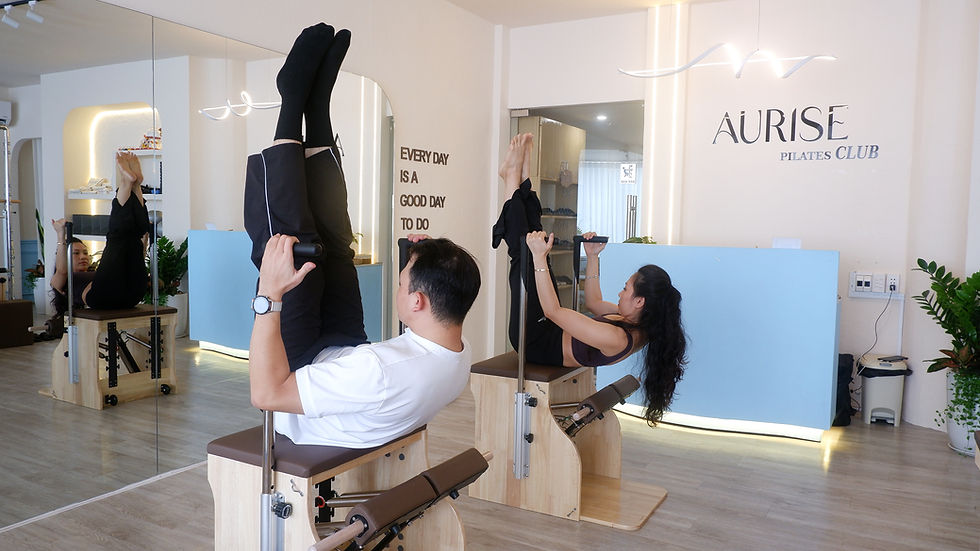
But does not seeing results from Pilates mean it isn't working?
Not necessarily. Progress in Pilates isn't always visible through changes in weight or physical appearance. Sometimes, the reason lies in your workout frequency, technique, intensity, or simply how you're measuring progress.
Before deciding to give up, let's explore seven common reasons why you might not be seeing the results you expected.
Not Seeing Results From Pilates: Does That Mean It Doesn't Work?
Not necessarily.
Pilates is a form of exercise that emphasizes muscular strength, movement control, stability, and body awareness.
When practiced consistently with an appropriate program, Pilates may help improve these abilities over time.
However, results depend on several factors, including your starting fitness level, personal goals, workout frequency, intensity, and recovery.
For example, if your goal is to improve core control, progress may become noticeable when you can maintain better stability or perform exercises with improved technique.
On the other hand, if you're expecting rapid weight loss, you may feel disappointed when the number on the scale doesn't change significantly.
That's because weight loss also depends on energy balance, nutrition, and overall physical activity, not Pilates alone.
The key is to identify what results you're actually looking for and whether your current workout program is designed to support those goals.
7 Reasons You May Not Be Seeing Results From Pilates
Several factors can affect your Pilates progress.
Some relate to your exercise habits, while others involve expectations or how your training program is structured.
1. You're Not Practicing Consistently Enough
One of the most common reasons for limited progress is an inconsistent workout schedule.
If you attend a few sessions and then take long breaks, your body may not receive regular enough exercise to develop strength, endurance, or movement control.
Like many other forms of exercise, Pilates benefits from repetition and appropriate progression.
Maintaining a consistent routine gives you more opportunities to reinforce proper technique and become comfortable with movements that once felt challenging.
However, exercising more frequently doesn't automatically mean faster results.
Your workout frequency should also account for recovery needs and other physical activities throughout the week.
If you're unsure how to organize your routine, explore How Many Times a Week Should You Do Pilates? A Training Schedule Based on Your Goals for guidance on building a sustainable schedule.
2. Your Technique Needs Improvement
Pilates places a strong emphasis on movement quality, which means technique can significantly influence your training experience and results.
An exercise that looks simple may require coordination between several muscle groups.
If you're struggling to maintain proper alignment or relying too heavily on momentum, you may not be creating the intended level of muscular engagement.
For example, during a core exercise, moving your legs through a large range of motion without maintaining trunk stability can make the movement more difficult to control.
Similarly, when using a Reformer machine, spring resistance and how you control the moving carriage can influence which muscles are engaged.
To improve your technique, pay attention to your instructor's guidance, adjust your range of motion, and prioritize control rather than simply completing more repetitions.
3. Your Workout Intensity Isn't Appropriate
If your workout program is too easy for your current abilities, your body may not receive enough challenge to continue adapting.
On the other hand, if the intensity is too high, you may become fatigued quickly, struggle to maintain proper technique, or have insufficient recovery time between sessions.
An appropriate training program generally involves gradual progression.
This might include adjusting resistance, repetitions, how long you hold a position, or the complexity of a movement.
However, increasing difficulty doesn't always mean using heavier springs or moving faster.
In Pilates, changes in body positioning, range of motion, and movement control can also make an exercise more challenging.
If you've been following the same routine for a long time without noticing progress, consider discussing your current exercise intensity with your instructor.
4. You're Expecting Results Too Quickly
Many people begin Pilates hoping to achieve a slimmer waist, better posture, or a more toned appearance after just a few sessions.
However, physical adaptation takes time and can vary considerably between individuals.
During the early stages, the most noticeable improvements may not involve appearance at all.
Instead, you might become more comfortable coordinating your breathing, maintaining balance, or using Pilates equipment with greater confidence.
Changes in strength, muscular endurance, and body composition generally require time and are influenced by factors beyond Pilates.
Rather than expecting visible results after a fixed number of classes, try tracking your progress over different stages and comparing your abilities with where you started.
For more information, read How Long Does It Take to See Results From Pilates? Changes You May Notice Along the Way to understand what influences the pace of progress.
5. You're Only Measuring Results Through Body Weight
Body weight is easy to track, but it doesn't tell the whole story of your Pilates progress.
You may improve your body control, muscular strength, or endurance without seeing significant changes on the scale.
Body weight can also fluctuate due to hydration, dietary habits, menstrual cycles, and other factors.
If improving your physique is one of your goals, you might also track body measurements, how your clothes fit, or changes in strength and movement ability.
However, neither measurements nor physical appearance should be the only indicators of progress.
Pilates also develops movement abilities that may be useful in everyday life, such as maintaining greater stability, coordinating movements more effectively, or feeling more comfortable during certain activities.

6. You're Overlooking Recovery and Nutrition
Exercise is only one part of physical development.
Your body also needs sufficient time and appropriate conditions to recover.
If you're constantly training at high intensity while getting insufficient sleep or not eating enough to meet your needs, you may feel fatigued and struggle to maintain workout quality.
A balanced diet that provides adequate energy and protein supports your body's adaptation to exercise.
Appropriate rest between sessions also helps manage accumulated fatigue, particularly if you participate in strength training, running, or other physical activities.
This doesn't mean you need to follow a strict diet to benefit from Pilates.
Instead, focus on eating adequately, maintaining healthy sleep habits, and adjusting
your workout schedule according to your recovery needs.
For more guidance, explore What to Eat Before and After Pilates: Meal Ideas for Beginners.
7. Your Pilates Program Doesn't Match Your Goals
Not every Pilates program is designed to achieve the same results.
A class focused on fundamental techniques and movement control may be structured differently from one designed to develop muscular strength or endurance.
If your goal is to build strength but your current program rarely increases the level of challenge, progress may be slower than expected.
Similarly, if you want to reduce body fat, Pilates alone may not create the changes you're hoping for without considering nutrition and overall physical activity.
Before concluding that Pilates isn't working, revisit your original goals and discuss your current training program with your instructor.
Sometimes, what needs to change isn't the type of exercise itself, but the exercises you choose, the intensity, or the class format.
How Can You Measure Pilates Progress Beyond the Scale?
If you only rely on body weight or what you see in the mirror, you may overlook meaningful improvements in your Pilates practice.
A more balanced approach is to track factors directly related to movement ability and your workout experience.
Area | How to Recognize Progress |
Movement control | Performing exercises with greater stability and fewer alignment adjustments |
Muscular strength | Completing exercises at a higher level of difficulty |
Muscular endurance | Maintaining movements for longer while preserving proper technique |
Balance | Feeling steadier during exercises that require stability |
Mobility | Moving through a more comfortable and controlled range of motion |
Body awareness | Better understanding body positioning, alignment, and muscular coordination |
Workout consistency | Maintaining a regular routine and feeling more confident during classes |
You can also keep brief notes after each session about the exercises you performed, their difficulty, and how your body felt.
Reviewing these notes over time may help you recognize improvements that weren't immediately obvious.
For example, an exercise that once challenged your balance may gradually become easier to control.
Or you may find that you need less time to understand and follow your instructor's directions.
Small changes like these can be meaningful parts of your Pilates journey.
When Should You Adjust Your Pilates Routine or Training Program?
Not seeing immediate results doesn't always mean you need to change your program straight away.
If you've only recently started Pilates, your body may still be adapting to unfamiliar movements and new physical demands.
However, there are situations where reassessing your routine may be helpful:
You've been practicing consistently but aren't moving closer to your goals: Review whether your exercises, intensity, and progress-tracking methods are appropriate.
Your exercises have become too easy: It may be time to adjust the difficulty to maintain a suitable challenge.
You frequently feel excessively tired after sessions: Consider your workout intensity, recovery time, and overall physical activity.
You struggle to maintain a regular schedule: Adjusting the frequency, duration, or timing of classes may make your routine more manageable.
Your personal goals have changed: Your training program should evolve to reflect your current needs.
When making adjustments, you don't need to change everything at once.
Discussing a few specific areas for improvement with your instructor can make it easier to monitor progress.
Importantly, if you experience persistent pain, worsening discomfort, or unusual symptoms during exercise, stop the movement causing pain and seek advice from an appropriate healthcare professional rather than simply increasing or decreasing workout intensity.
Rediscover Your Pilates Motivation at Aurise Pilates

Not seeing the Pilates results you expected can be discouraging, but it doesn't necessarily mean your previous sessions were wasted.
Sometimes, what you need is to revisit your goals, adjust your expectations, or find a training format that better suits your current abilities.
At Aurise Pilates, the Pilates journey goes beyond physical appearance. It's also an opportunity to understand your body, develop movement control, and build a sustainable self-care routine.
Whether you're returning to Pilates after a break or exploring a new approach to exercise, identifying your needs and choosing an appropriate class can be a meaningful first step toward long-term consistency.
There's no need to compare your progress with anyone else's.
Every small improvement, from controlling a movement more effectively to maintaining a regular workout schedule, can become a reason to keep going.


Comments